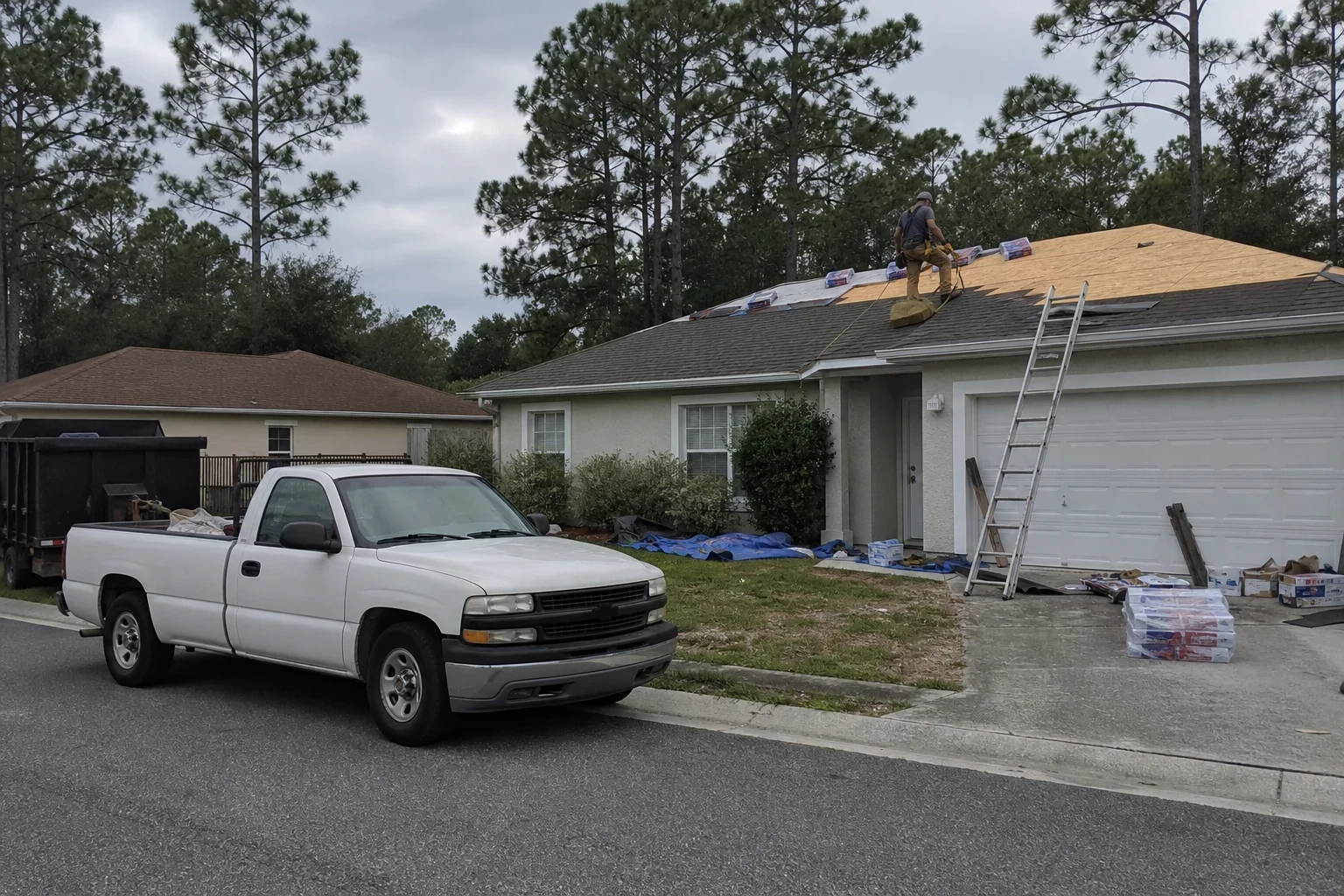
ServicesRoof Inspections
Roof Inspections in Callahan
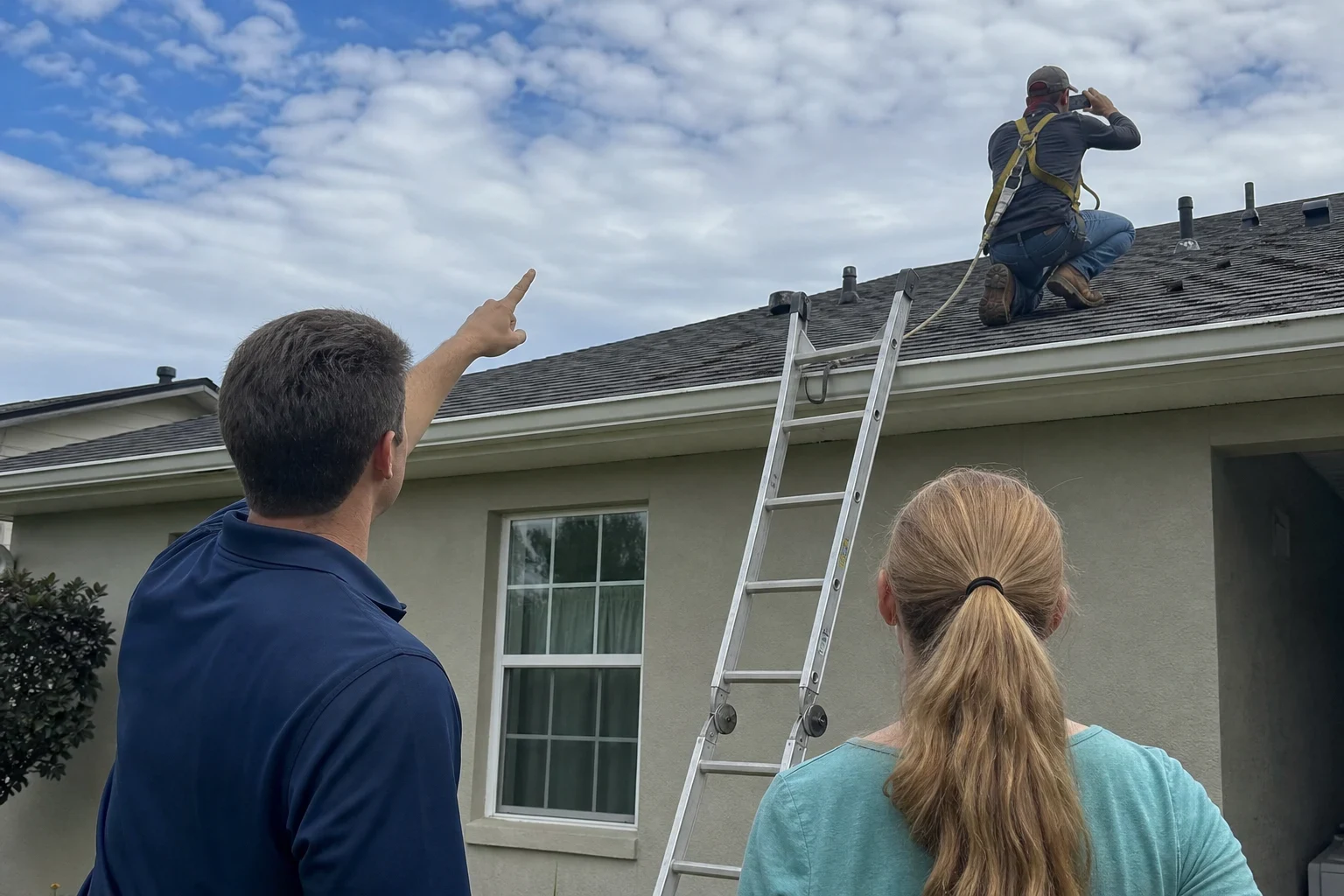
We check your roof from the ridge to the drip edge and from the attic side, then sit down with you and the photos. You learn the condition of each part, why it is wearing the way it is, and what, if anything, needs attention.
Why an Inspection Comes Before Any Repair Talk
Roofs wear out piece by piece. Granules wash off shingles, the sealant on pipe boots dries and splits, and nails back out after years of heating and cooling. Catching those changes early keeps a small repair small, before water reaches the decking and stains the drywall below.
It is the right call before you buy or sell a house, after a strong storm, when a roof passes about fifteen years old, or when you simply want to know where you stand. Summer thunderstorms and the tropical weather that reaches northeast Florida test every seam, so knowing which seams are weak lets you plan ahead.
We keep the visit low impact. Ladders go on stabilizers so they never rest on gutters, we stay off fragile spots, and if we need the attic hatch inside your home we lay a drop cloth and wear shoe covers. Before we leave, we tell you what we saw in plain terms.
What We Check on Every Inspection
Shingle and panel surface
We look for granule loss, cracking, curling, lifted tabs and broken seal strips on shingle roofs. On metal roofs we check panel seams, fastener washers and any rust at cut edges.
Flashing and roof openings
Anywhere a pipe, chimney or wall meets the roof is a likely leak point. We check step flashing along walls, chimney counterflashing, valley metal and the rubber boots on plumbing vents, which tend to crack in strong sun years before the shingles give out.
Attic underside and decking
From the attic we look for water stains, darkened or soft plywood, rusted nail tips and daylight where it should not be. This side shows problems the surface hides.
Ventilation and airflow
We confirm that soffit intake is not blocked by insulation and that ridge or box vents are clear. Poor airflow cooks shingles from below and lets moisture condense on the decking.
Gutters and drainage
We check that gutters are pitched toward the downspouts, that pine needles and debris are not damming them, and that water is not spilling behind the fascia. If gutter work is needed, we note it in the findings, and our Gutters page explains that service.
Signs Your Roof Is Due for a Look
- Granules in the gutters
- Sand-like grit at the downspout means shingles are shedding their protective layer. Bare asphalt ages fast under direct sun.
- A stain on the ceiling
- Even a dry, faded ring means water got in at some point. The source is often several feet uphill from the stain.
- Missing or lifted shingles
- One shingle gone after a windy afternoon exposes nail holes and underlayment. Lifted tabs that no longer lie flat will catch the next gust.
- A strong storm just passed
- Wind can break seal strips without tearing shingles off, and that damage is easy to miss from the ground. We offer free post-storm inspections for exactly this reason.
- An older roof with no records
- If you do not know when the roof went on or what was repaired, an inspection gives you a baseline for planning and budgeting.
How the Inspection Visit Runs
- 1
A call to set the visit
We ask about the roof age, any leaks you have noticed and whether attic access is inside or in the garage. We agree on a time and tell you who is coming.
- 2
Setup with your yard in mind
We place ladders away from flower beds and on firm ground, and we let anyone at home know when we are going up so kids and pets stay clear.
- 3
Roof and attic check
We move across the roof one plane at a time. Each problem gets two photos: one that shows where it sits on the roof and one close enough to see the damage itself. Then we check the attic from the hatch, keeping your floors covered.
- 4
Walk-through of findings
We show you the photos, name each part and explain what caused the wear. Items are sorted into what needs repair now, what to watch and what is fine.
- 5
Next steps in writing
You get the findings in writing. If work is needed, we give you a free, no-obligation estimate and you decide when, or whether, to go ahead.
What Shapes the Cost of an Inspection
After a storm, our inspection is free. For other inspections, we explain on the phone what the visit will cover and what it costs before anything is scheduled, so there are no surprises when we arrive.
- Roof size and pitch
- A steep roof needs extra fall protection and more time per section. A large or cut-up roof with many valleys and dormers simply has more to check.
- Roofing material
- Shingle roofs can be walked carefully. Metal and some older materials call for different footing and more time, since we avoid stepping where panels could dent or crack.
- Attic access
- An open, floored attic is quick. A tight crawl space or a hatch in a closet takes longer and more care to keep the house clean.
- How much detail you need
- A basic condition check moves faster than the record a buyer, seller or insurance claim may call for. That kind of documentation means more photos and measurements of each problem area.
Roof Inspection Questions
- Will walking on my roof damage it?
- Not when it is done with care. We wear soft-soled shoes, step on the lower edge of shingle courses where they are supported, and stay off a roof that is wet or too soft to walk. If a section looks fragile, we inspect it from the ladder or the attic instead.
- Do I need to be home during the inspection?
- Only if we need the attic access inside your home. Otherwise the roof work happens outside, and we can go over the photos with you by phone afterward. Most people like to be there for the walk-through, and we are glad to wait.
- Can you meet with my insurance adjuster after a storm?
- Yes. We work directly with your insurance adjuster on storm damage claims, showing them the damage we found and the photos we took. The adjuster still makes the coverage decision, and we explain each step so you know what to expect. If damage is confirmed, our Storm Damage Repair page covers what comes next.
- Is the inspection a lead-in to selling me a whole new roof?
- It is not. A lot of the roofs we climb only call for a handful of fixes, like a cracked vent boot, a loose run of step flashing or a few shingles swapped out. We say so when a roof repair will hold up, and we also say so when the wear covers too much of the surface for patching to pay off. Either way, the photos show you the reason behind our answer.
- How much of my day will the inspection take?
- Plan on part of a morning or afternoon, not the whole day. Time on the roof and in the attic depends on size, pitch and how many past repairs we need to trace, and we leave room afterward to talk through what we found. Once we know a little about your roof on the phone, we can give you a closer sense of timing.
- Is financing available if the inspection turns up work?
- Yes, financing is available. We can explain the options while we go over your estimate so you can plan the repair or replacement in a way that fits your budget.
Know Exactly Where Your Roof Stands
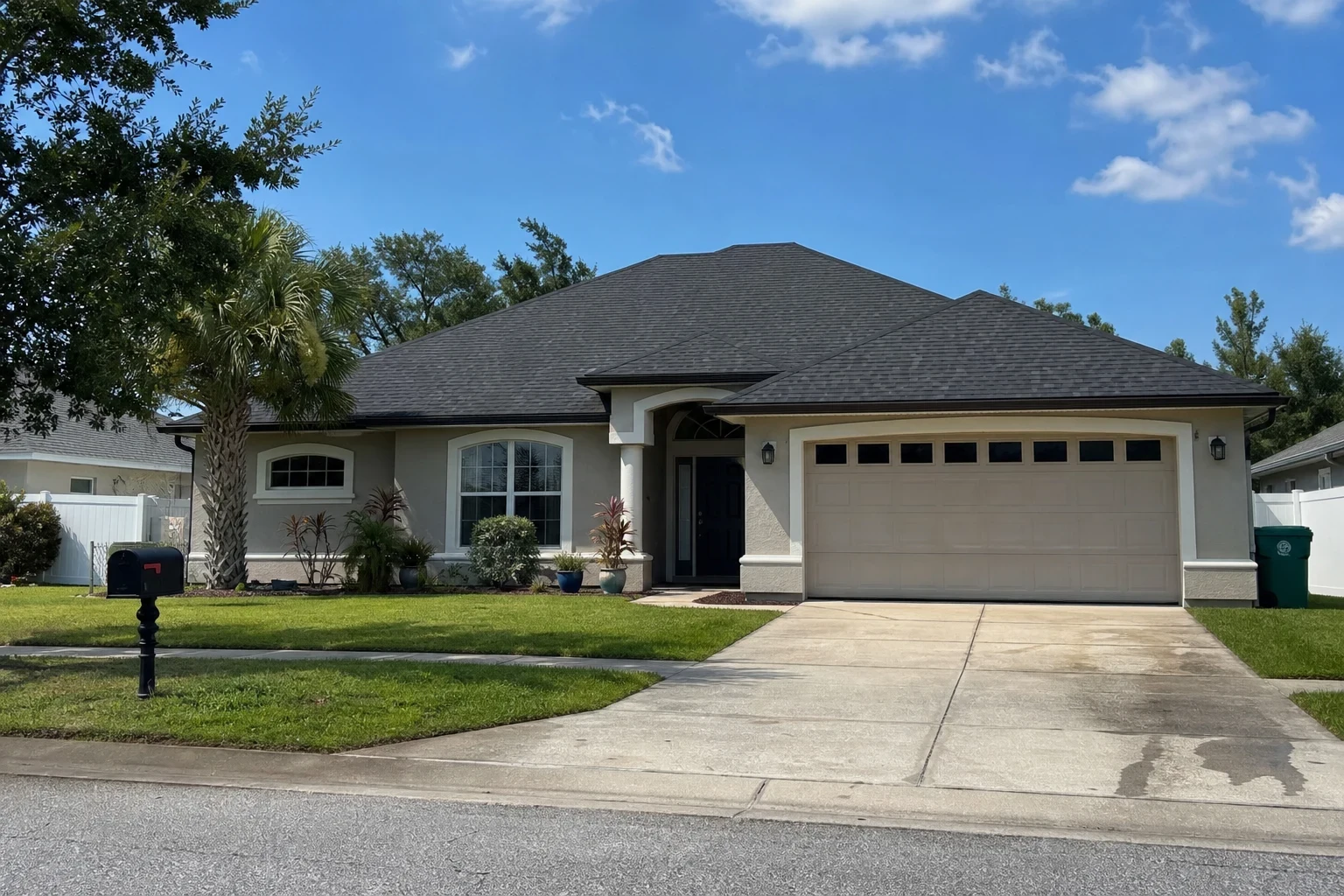
We check every part, protect your yard and floors while we do it, and walk you through what we found. After that, you decide what happens next.