ServicesRoof Repair
Roof Repair in Callahan, With Your Yard Covered and Every Finding Explained
Most leaks start at one small part: a cracked pipe boot, a lifted shingle, a loose run of step flashing. We find that part, show you a photo of it, fix it with tarps over your beds and walkways, and tell you plainly what we did and why.
A Repair Is the Right Call When the Roof Around It Is Still Sound
A roof rarely fails all at once. Water finds the weakest detail, usually where the shingle field meets something else: a plumbing vent, a chimney, a sidewall, a valley. If the shingles around that spot still lie flat, hold their granules and stay sealed down, fixing the detail is usually the sensible move.
We tell you when it is not. If a tab snaps when we lift it, or the decking flexes underfoot across a wide stretch, a patch only buys time until the next weak spot opens a short distance away. Then we explain what we saw and talk through roof replacement with you instead.
Before anyone climbs a ladder, we tell you who is coming, roughly how long they will be there and whether we need to see your attic.
What Our Roof Repair Work Covers
- Leak tracing
- Water often enters well uphill from the stain on your ceiling, then runs along a rafter or the top of the decking. We follow the trail from the attic side and the roof side until the two match, so the fix lands on the actual entry point.
- Pipe boot replacement
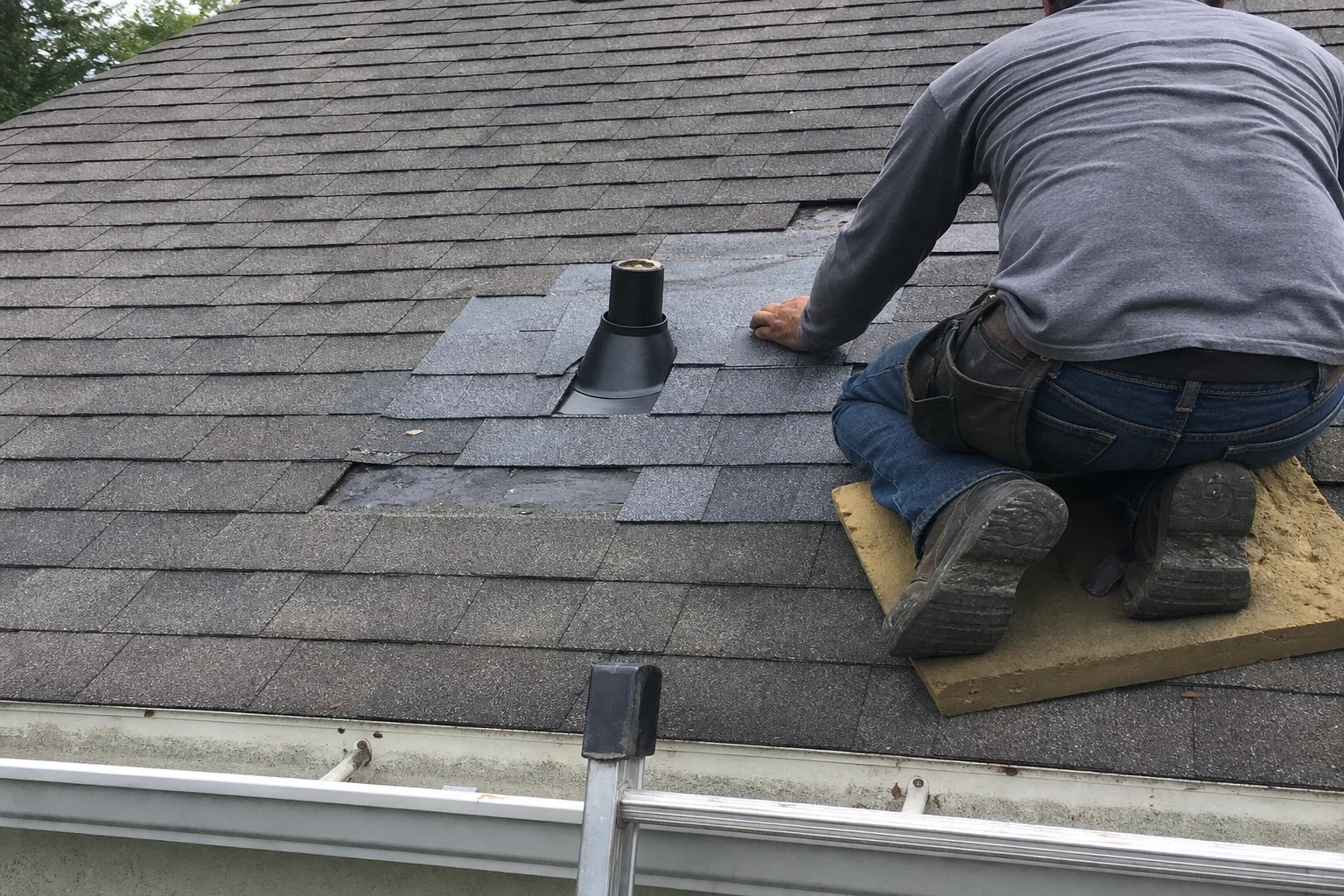
- The rubber collar around a plumbing vent dries out and splits under years of sun. We replace the whole boot and reseal the shingles over its flange, rather than smearing caulk on a crack that will open again.
- Flashing repair
- Step flashing along walls, counterflashing at chimneys and the metal in valleys can loosen, rust or get buried in old sealant. We reset or replace the pieces and lap them so water sheds downhill on its own.
- Shingle replacement
- Wind lifts tabs and breaks the adhesive strip, and creased shingles let rain blow under. We swap damaged shingles, nail them on the correct line and seal them down.
- Decking repair
- A slow leak can soften the plywood or OSB under the shingles. We cut out the swollen sections and fasten new sheathing to the rafters before closing the roof back up.
- Ridge and vent fixes
- Cracked ridge caps, popped nails and loose roof vents are common leak points. We refasten or replace them and check the seal around each one.
Signs Your Roof Needs a Repair
A stain that grows after rain
A brown ring on the ceiling that darkens after each storm means water is still getting in. During the summer afternoon thunderstorm season, that can mean wet insulation for weeks before you notice.
Shingles or tabs in the yard
Pieces on the lawn after wind mean a patch of the roof has lost its cover. The underlayment beneath will not hold out rain for long.
Grit collecting at the downspouts
A newer roof sheds a little loose grit during its first year or so. On an older roof, a thick layer in the gutters tells us the asphalt is bare to the sun and starting to break down.
Damp decking or daylight in the attic
Dark spots on the underside of the sheathing, rusty nail tips or pinholes of light all point to a failure above.
Nails backing out
Heat cycles push nails up until they lift the shingle above them and let water track down the shank.
What Sets the Price of a Roof Repair
What a repair costs comes down to what broke, what the water damaged along the way and how hard the spot is to get to. We price only after we look, and each item gets its own line on the written estimate. If the job turns out larger than a quick fix, ask about financing so the repair can happen now.
The wood below
Changing a boot over dry decking is a small job. If water has rotted the sheathing or a rafter end, that wood must be replaced, and your estimate will show it.
Pitch and height
A steep slope or a second-story eave means roof jacks, harnesses and slow, careful steps. That setup adds time, and the estimate reflects it.
Finding a match
Popular shingle lines are simple to get. Older styles or discontinued colors take more hunting, and we tell you at the start how close the match will be.
Repair size and permits
Most small repairs do not need a permit. Bigger sections may need one from the county, and if yours does, we let you know before work begins.
How a Repair Visit Runs
- 1
We set the visit by phone
You tell us where you have seen water and when. We give you a time window and let you know if we will need attic access, so someone can be home for that part.
- 2
Protect, then inspect
Tarps go over flower beds and shrubs under the work area, and boards go across soft ground where ladders stand. If we go inside, we use drop cloths and shoe covers on the way to the attic hatch.
- 3
Photos and a written estimate
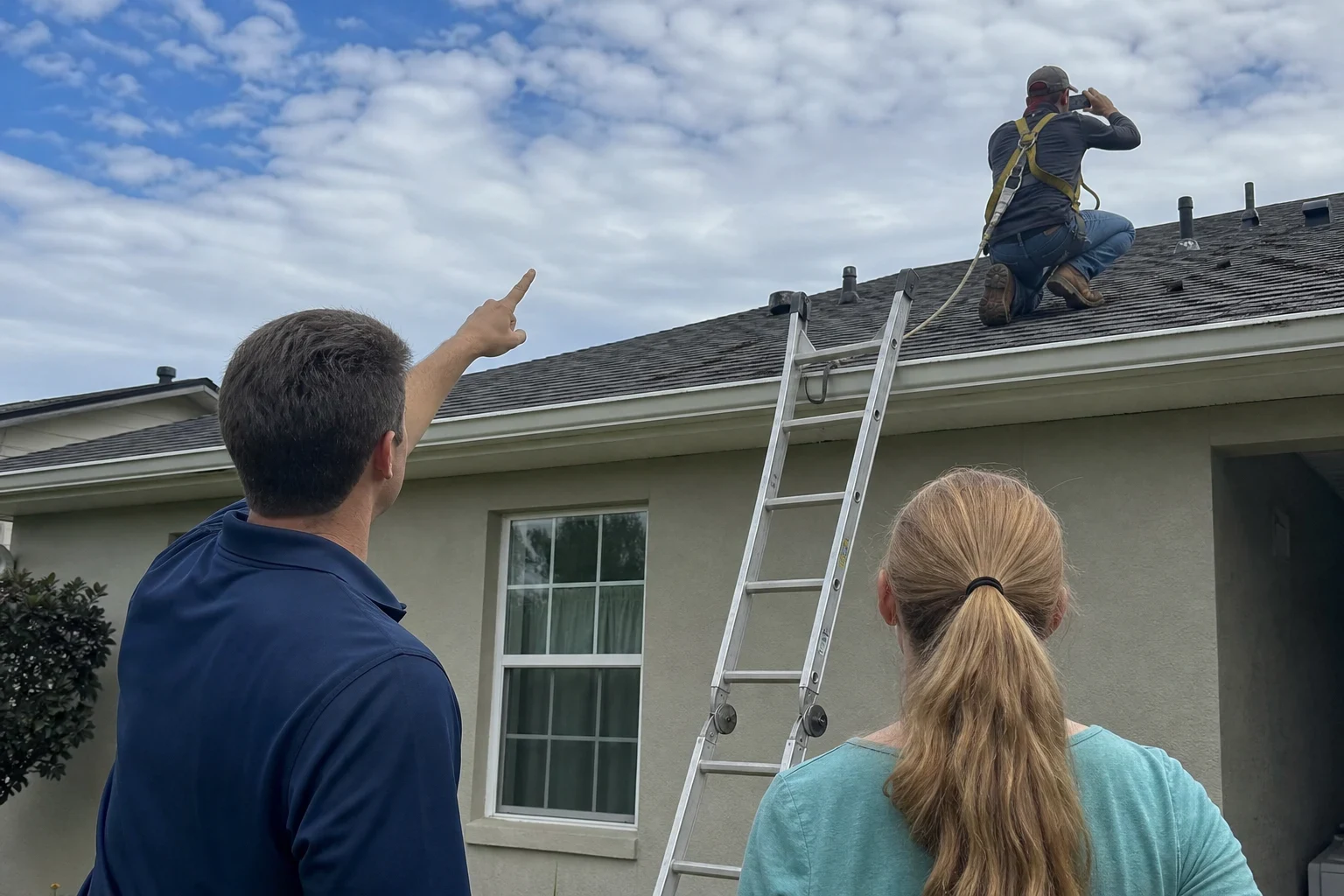
We show you pictures of the failed part and the area around it, then give you a written estimate that lists each repair. Nothing starts until you approve it.
- 4
The repair
We remove what failed, fix what is underneath and install new materials lapped in the right order. When the damage is confined to one spot, we can usually finish before we pack up the ladders.
- 5
Nail sweep and final photos
We gather up old shingles and scraps, pull a magnet across the grass and driveway for stray nails, and show you pictures of the completed repair.
Questions About Roof Repairs
Will the repair blend in with my existing shingles?
It will come close but rarely match perfectly, since years of sun change the look of even the same shingle. We bring samples, show you the closest one and tell you honestly how it will look before you approve it.
How do I know if I should fix my roof or replace it?
We look at the shingles surrounding the problem, not just the problem itself. If they still bend without cracking and remain sealed, fixing that area makes sense. If most slopes are brittle or the decking gives way in several places, we will show you why a new roof is the smarter spend.
Do you need to come inside?
Only if the leak shows indoors or the attic is the only place to trace it from. We tell you ahead of time, cover the floor on the way in and keep the visit short.
Will my insurance pay for a roof repair?
It comes down to the cause. Most policies leave out wear that develops over time. A single event, like wind ripping off shingles or a hailstorm, is usually where coverage applies. On storm damage, we deal with your insurance adjuster directly through our storm damage repair service.
Will caulk or roof cement fix a leak?
Only briefly. Sun and heat wear sealant down, and it often hides a failed boot or piece of flashing. We repair or replace the actual part and use sealant only where the manufacturer calls for it.
Get the Leak Fixed Before the Next Storm
Tell us where you are seeing water. We will set a time, cover your yard, find the source and give you a written estimate at no charge.